Welcome To 180 Degrees Travel Blog
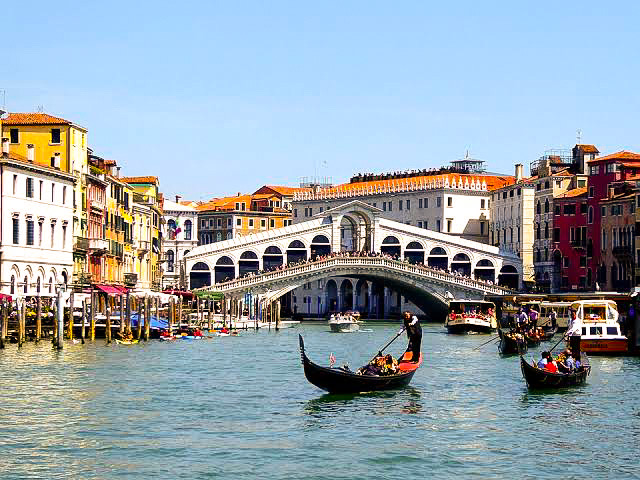
The Grand Canal
24 Hours in Trieste, Italy
By Enobong Ekuwem
To discover the secret of a happy life head to Trieste, the Italian port tucked inside the Slovenian border. The Triestini embrace life with a passion that is palpable and infectious, if the chatter at evening aperitivo is anything to go by. And at the merest hint of sunshine, Triestini are off to the nearby seaside, Barcola, even in November, and even though it’s a concrete strip.
This unsquashable humour is no doubt born of being a frontier city, variously owned or occupied by the Romans, Habsburgs, Mussolini’s regime, Germans and Allied Forces, only finally returning to Italy in 1954. The consequence is a glorious jumble of architectural and ethnic influences. Discover the Serbian Orthodox, Greek Orthodox and Helvetic Evangelist churches, while the city’s synagogue is one of the largest in Europe.
And here’s another happy fact about Trieste; it has, probably, the finest coffee in Italy. Its tax-free port status coincided with the coffee craze sweeping Europe. It developed a string of Viennese-style coffeehouses. Several still exist, such as Caffè Tommaseo with its faded bello époque charm and where “capo in B” (macchiato in a glass) comes with a tiny dish of whipped cream.
Climbing the narrow, paved streets of the Old Town, lined with tall, shuttered, sorbet-coloured buildings – from one of which a relic from the Roman walls, the Riccardo Arch, leans out like a lost limb – eventually popping out at San Giusto Cathedral.
To gain an idea of how wealthy some Triestini became, Visiting the Museo Revoltella, the former 19th-century palazzo of Pasquale Revoltella, a whizz-kid financier who, amongst other things, put money into the Suez Canal. It dazzles from the marquetry-style parquet flooring and silk wall-hangings to the chandelier-hung ballroom and white-and-gold dining room. His art collection forms the basis of the Modern Art gallery, which spreads into two adjoining palazzi.
More Roman remains – a forum and basilica – lie nearby in the shadow of the 15th-century castello, a fortified residence for the Habsburgs and, frankly, dull, but worth it for the views over city and Adriatic. Sparkling on a headland to the north, like a frothy-white Disneyesque creation, was Miramare Castle to which I was headed to later in the afternoon.
Built between 1855 and 1860 for Archduke Maximilian of Habsburg, the castle is a temple to his vanity, bristling with castellations, over-the-top furnishings and a ludicrous Throne Room whose throne, with gilded lions as feet, was never used as he was executed in Mexico in 1867 when he was their Emperor.
The surrounding parkland is a mix of Italianate and English, but I preferred the little-frequented Orto Lapidario (Lapidary Garden) in the city’s Museum of History and Art (a musty treasure trove of archaeological plunder, from Roman glass to Egyptian mummies). Like a lost garden, strewn with classical urns, tombstones and inscriptions, it was a perfect sun-soaking spot to gear myself up for the evening’s high-octane aperitivo hour.
Trieste has a very lively nightlife scene where a late afternoon aperitif can easily lead to an early morning taxi ride home, with a couple of typical local meals, several new friends and lots of memorable conversations often falling in between – at least that’s always been my experience. As with the rest of Italy, there is often a very fine line separating cafés and bars here, look towards the trendy Cavana neighbourhood to the west of Piazza Unità, where a cool new bar or restaurant seems to open every week or so these days.
What to avoid
The bars along the waterfront; noisy and touristy.
Eating early if you want atmosphere; Italians eat around 9pm or 10pm.
Ordering a cappuccino; it doesn’t exist. Ask for a caffè latte.
Follow My Blog
Get information about my latest destination directly to your inbox.
 180 DEGREES TRAVEL BLOG